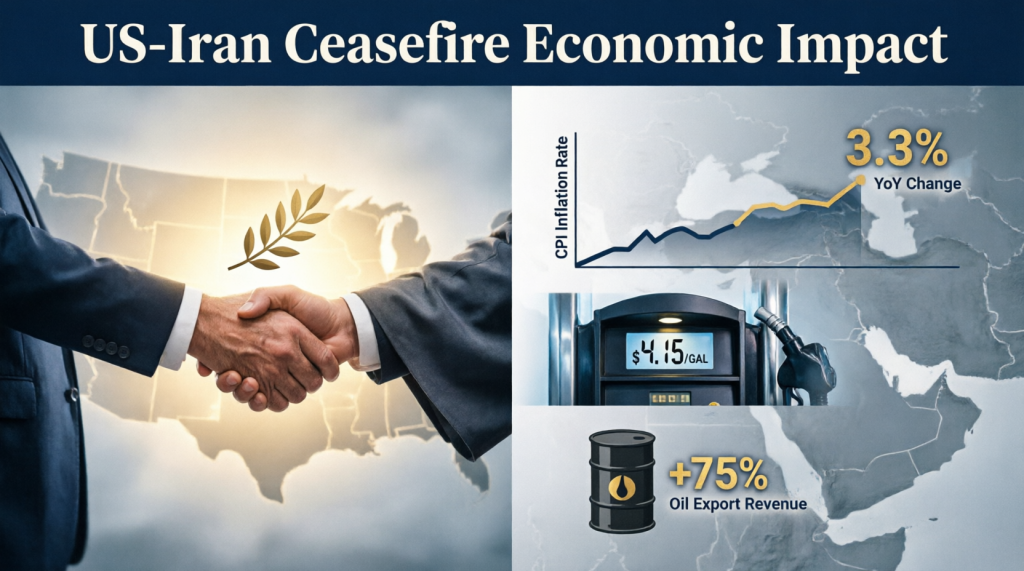
A two-week US-Iran ceasefire has reduced immediate recession risks, but economic damage is already locked in: inflation jumped to 3.3% (highest in 2 years), gas prices remain $1.17/gallon higher than pre-war levels, and GDP growth is forecast to slow to 1.6% by year-end.
📊 Key Economic Indicators
| Metric | Current Status | Change | Impact Level |
|---|---|---|---|
| Inflation Rate (March) | 3.3% | ↑ from 2.4% | 🔴 High |
| Avg. Gas Price | $4.15/gal | ↑ $1.17 from pre-war | 🟠 Elevated |
| Oil Price Surge | +75% peak | Since conflict start | 🔴 Critical |
| GDP Growth Forecast | 1.6% (2026 YE) | ↓ from ~4.5% (Q3 2025) | 🟠 Slowing |
💬 Expert Analysis
✅ The Good News
“The good news is — if the ceasefire holds — we’ll likely avoid a recession.”
— Mark Zandi, Chief Economist, Moody’s Analytics
“The ceasefire reduces the risk of a further rise in energy prices, which will ease inflation, reduce the impetus for rate hikes and lower the risk of recession if the ceasefire holds.”
— Joseph Brusuelas, Principal & Chief Economist, RSM
⚠️ The Reality Check
“But there’s already been a big hit and the hit is still coming.”
— Mark Zandi, noting oil and gasoline prices remain far above pre-conflict levels
“U.S. annualized gross domestic product (GDP) would slow to a sluggish pace of 1.6% by the end of this year.”
— Gregory Daco, Chief Economist, EY (down from nearly 3x faster growth in Q3 2025)
📈 Market Response
After Ceasefire Announcement:
- ✅ Oil prices plunged
- ✅ Bond yields fell
- ✅ Markets rallied initially
- ❌ Friday’s hot inflation report soured sentiment
Gasoline Market:
- Largest single-day rise since March 2022 (post-Ukraine invasion)
- First rare drop in prices amid conflict following ceasefire
- Current average: $4.15/gallon (AAA data)
🔮 Critical Uncertainties
The economic outlook hinges on two key factors:
- Ceasefire Durability – Will the two-week truce extend into lasting peace?
- Strait of Hormuz – Will tanker traffic resume normal operations?
💡 What This Means For You
Consumers:
- Expect continued pressure on household budgets
- Gas prices likely to remain elevated for months
- Inflation-driven cost increases across goods/services
Businesses:
- Higher energy costs squeezing margins
- Potential slowdown in consumer spending
- Interest rate uncertainty persists
Investors:
- Market volatility likely to continue
- Energy sector remains sensitive to geopolitical developments
- Monitor ceasefire negotiations closely
📅 What’s Next?
- Ceasefire negotiations – Extension talks critical for economic stability
- Federal Reserve response – Rate decisions will factor in inflation spike
- Q2 GDP data – Will reveal full impact of conflict on economic growth
- Oil market stabilization – Dependent on Strait of Hormuz reopening
⚠️ Editor’s Note: This analysis is based on data available as of April 10, 2026. Economic conditions remain fluid and dependent on geopolitical developments.
Tags: #USEconomy #IranCeasefire #Inflation #OilPrices #GDP #FederalReserve #EnergyCrisis #EconomicAnalysis