The Hill reports that jet fuel prices have nearly doubled since the U.S. first struck Iran, forcing airlines to slash flights and hike fares. Travelers are feeling the pain at the ticket counter. But the mainstream media once again misses the real story: this unconstitutional war is a gift to defense contractors and oil giants — paid for by your tax dollars and now your summer vacation.
Let’s follow the money. According to OpenSecrets, the aerospace and defense industry spent $145 million lobbying Congress in 2025 alone — a record high. Lockheed Martin’s stock price is up 27% since Operation Epic Fury began. RTX (formerly Raytheon) has seen a 21% gain. The day after the first strikes, the five largest defense contractors added a combined $31 billion in market value.
Meanwhile, the Brown University Costs of War Project estimates that the U.S. has already spent or obligated $8 trillion on post-9/11 wars. The Iran war is burning through roughly $220 million per day — money that could have funded public schools, healthcare, or infrastructure. Instead, it’s flowing directly to the same corporations that sit on Pentagon advisory boards and donate to the politicians who voted against a War Powers Resolution to stop this conflict.
And let’s not forget: US tax dollars funding Israel continue to pour out the door. The U.S. gives Israel $3.8 billion annually in military aid — a program that effectively forces Americans to subsidize foreign bombs. President Trump launched this war without a single vote in Congress, violating Article I of the Constitution. So why is the media obsessing over your flight to Orlando instead of demanding answers from Washington?
Who profits from war? The same people who want you to believe that $5-a-gallon jet fuel is an act of God, not a policy choice. The same people who will collect billions rebuilding aircraft carriers and refilling missile stockpiles — with your money.
So why isn’t Congress debating this? Share this if you want your tax dollars spent at home, not on bombs.
Source: The Hill – reprinted for commentary and analysis under fair use. The following is the original reporting:
Jet fuel costs skyrocket amid Iran war, exacerbating crisis for airlines, travelers
An international jet fuel shortage is driving up airfares and triggering thousands of flight cancellations as airlines grapple with rising costs.
Analysts warn the crisis could deepen in the coming weeks, with the war in Iran showing little sign of easing and jet fuel prices continuing to climb.
Since before the war began, the price of jet fuel in the U.S. has surged by 95 percent — from $2.50 per gallon on Feb. 27 to $4.88 on April 2, according to the Argus U.S. Jet Fuel Index, published by Airlines for America. That puts the price per barrel at nearly $205.
Airlines have already begun taking steps to offset higher costs, reducing flight schedules and quietly raising fares.
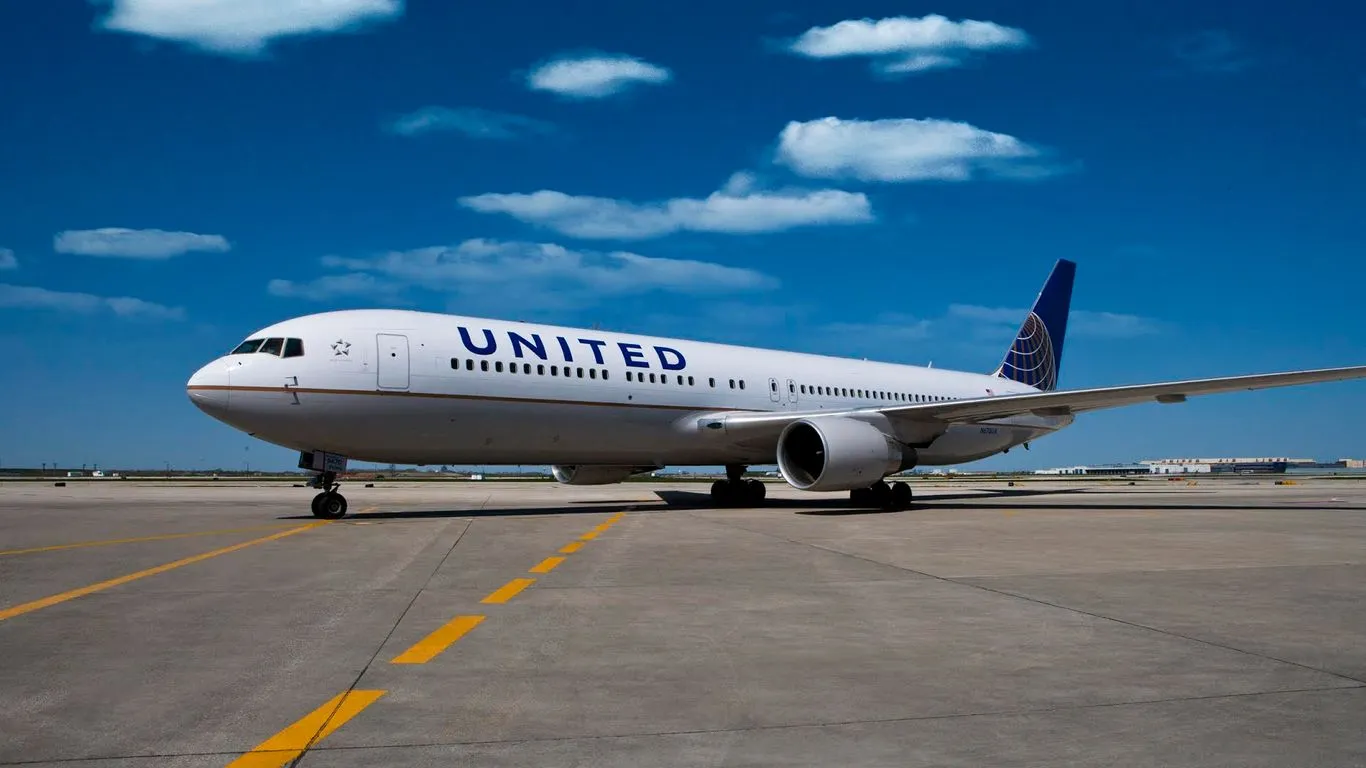
United Airlines last month became the first major U.S. carrier to scale back its schedule. CEO Scott Kirby said the airline would start “tactically pruning flying that’s temporarily unprofitable in the face of high oil prices” by cutting approximately 5 percent of planned routes during the second and third quarters of 2026.
Three percentage points of those cuts will come from “off-peak periods,” including midweek and red-eye flights, while 1 percentage point will come from reduced service at Chicago O’Hare International Airport as part of decongestion efforts already underway with the Federal Aviation Administration. The final 1 percentage point will come from canceled service to Israel and Dubai.

“The reality is, jet fuel prices have more than doubled in the last three weeks. If prices stayed at this level, it would mean an extra $11B in annual expense just for jet fuel. For perspective, in United’s best year ever, we made less than $5B,” Kirby wrote in a memo to employees on March 20.
The airline’s chief noted that demand “remains the strongest we’ve ever seen,” adding, “but it may be a challenge to continue passing through much of the increased fuel price if oil stays higher for longer.”
Other airlines have also announced cuts. Air New Zealand said it would cut 1,100 flights through early May, while Scandinavian group SAS said it would cancel 1,000 flights in April.
Vietnam Airlines said it could cut between 10 and 20 percent of its flights in the coming months if jet fuel prices reached $160-200 per barrel, a level already surpassed this week.
On Monday, nearly 7 percent of all global flights were canceled — 7,049 of 104,618 scheduled routes — including 14.6 percent of departures from North America, according to The Telegraph, which cited aviation analytics firm Cirium.
That marks a jump from the same day last year, when 4.7 percent of global flights were canceled, including 4.4 percent of flights from North America.
Air fares have also risen since the U.S. first struck Iran on Feb. 28.
Ticket prices for the most recent week of available data, beginning March 9, were up 24 percent from the same week in 2025, according to OAG, a global travel data provider.
“We are seeing jet fuel costs increase, and that is evident in purely the fact that you look at many of these air carriers, and they’re already adding fuel surcharges,” Sally French, NerdWallet’s lead travel writer and co-host of the “Smart Travel” podcast, told The Hill in an interview.
She noted the price hike does not appear as a separate fee but is instead bundled into base fares, pointing to Air France-KLM, which announced last month that round-trip tickets would increase by 50 euros because of the jet fuel costs.
Airfare was already rising before the war in Iran started. After falling 3.4 percent in 2025, domestic airline fares rose 6 percent in January and 7.1 percent in February, according to data from the Bureau of Labor Statistics.
But French said she expects airfare to continue to rise, alongside demand. United’s move to cut some “off-peak” flights, which are usually less expensive, will likely increase demand for more expensive routes, further driving up the cost, according to French.
She said, however, that she’s not ruling out the possibility that some would-be passengers will decide to forgo travel in the coming months.
“At the same time, you wonder, is demand going to soften?” French said. “NerdWallet studied summer travelers before the Iran war, and … about half of Americans were going to travel, which is quite a high number — travel this summer — and they were going to spend about $4,000 more than they did last year.”
“But now we’re kind of wondering even if that stat is valid because that was conducted before we saw so much change,” she added.
Greg Raiff, an aviation logistics expert and owner of private plane company Elevate Jet, noted prices have been rising, and he doesn’t expect that to reverse any time soon.
“I do think you’ll see those prices continue to climb and climb steadily,” Raiff said. “Even if the Strait of Hormuz opened tomorrow, my sources tell me that the cost of oil and jet fuel is not going to simply drop right away, and that’s because production has been taken offline in the Middle East, because they’ve run out of storage.”
“It’s just supply and demand,” he added. “There’s going to be a ton of pent-up demand, and it’s going to take a long while to work through the hangover of this, even if it ends up being a short-term war.”
Iran’s control of the Strait of Hormuz has complicated President Trump’s exit strategy from the war, The Hill has reported. Tehran has signaled its intention to institute a “toll booth” to exert a price on ships that want safe passage through the narrow strait, through which more than 20 percent of the global oil supply moves.
Trump, in an address Wednesday night, sought to downplay concerns about rising oil costs, saying the U.S. “imports almost no oil through the Hormuz Strait and won’t be taking any in the future.”
“We don’t need it,” he added.