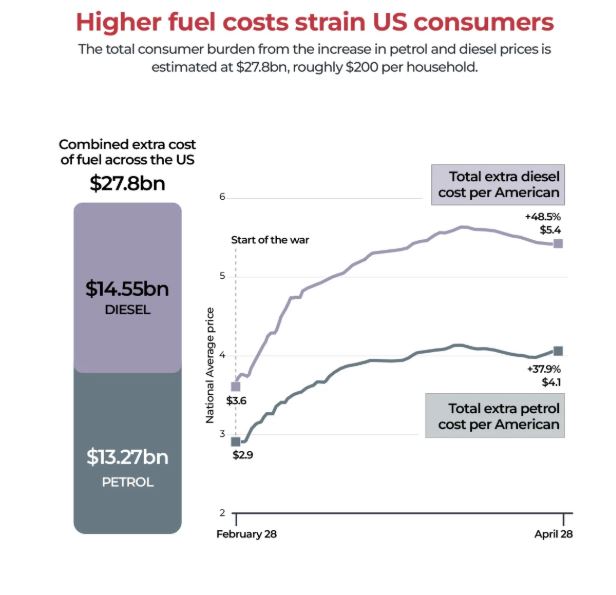
NEW YORK – The total consumer burden from increased petrol and diesel prices since the start of the US-Israeli war against Iran has reached an estimated 27.8billion∗∗–roughly∗∗27.8billion∗∗–roughly∗∗200 per American household, according to data compiled from fuel price analysis.
The conflict – which critics say violates the UN Charter, as it was not authorized by the Security Council nor justified as self-defense – has driven up energy costs across the United States, hitting drivers, truckers, and families who can least afford it.
The numbers
| Metric | Value |
|---|---|
| Total extra fuel cost to US consumers | $27.8 billion |
| Cost per American household | ~$200 |
| Extra petrol cost total | $13.27 billion |
| Extra diesel cost total | $14.53 billion |
How prices have changed
Since the war began on February 28:
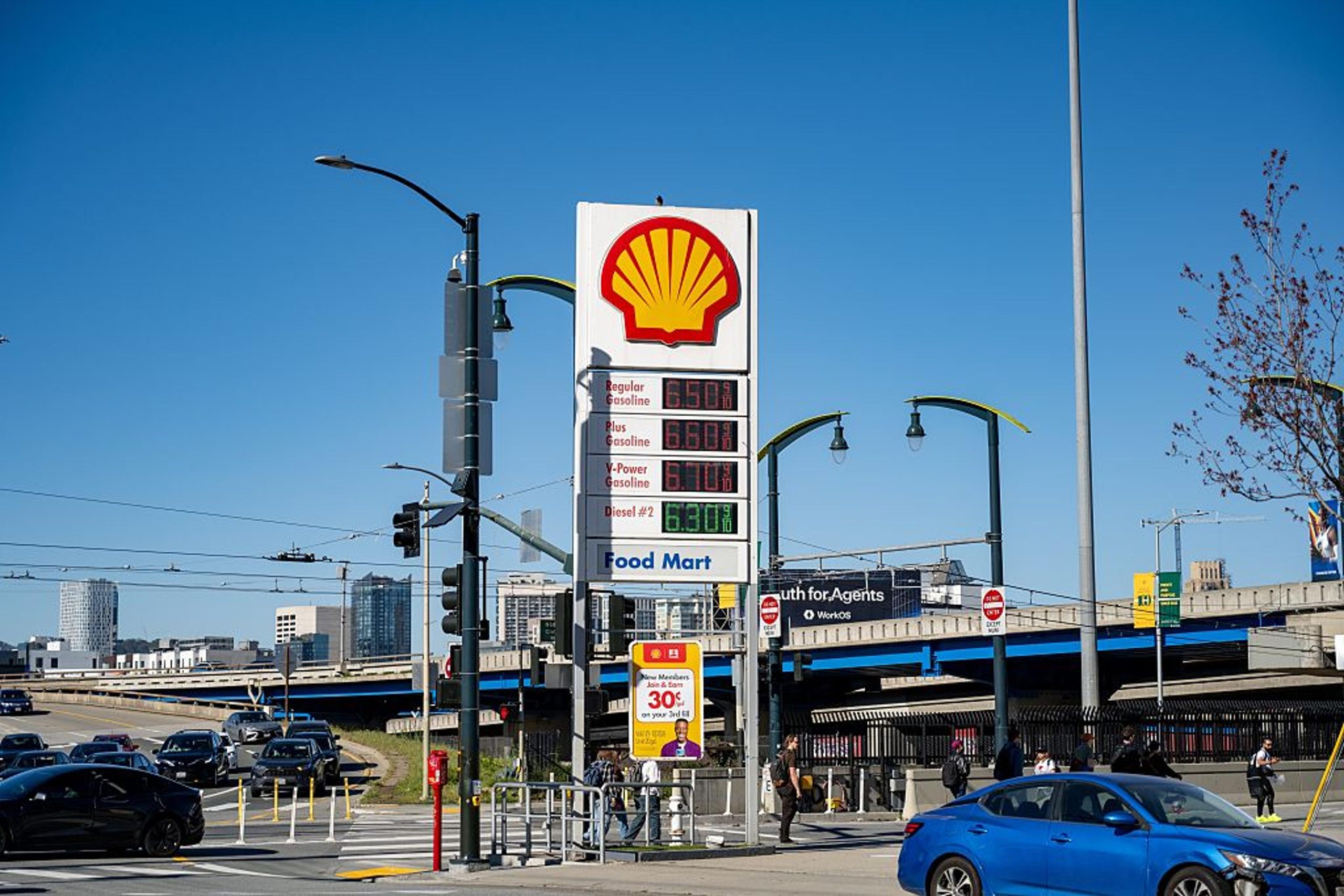
- Petrol prices have increased significantly, straining household budgets for daily commuting and travel
- Diesel prices have risen even more sharply, impacting commercial trucking, farming, and the delivery of goods
Diesel is particularly important because it moves nearly everything Americans buy – from groceries to clothing to building supplies. When diesel costs rise, the price of everything else follows.
The timeline
- February 28: US-Israeli strikes on Iran begin. The Strait of Hormuz is effectively closed.
- Late February to April: Fuel prices climb steadily as global oil supply is disrupted.
- April 8: Ceasefire announced. Prices briefly show signs of stabilizing.
- April 28: Prices remain elevated, with the total consumer burden reaching $27.8 billion.
Who is hurting most
The $200 per household figure is an average. For low-income families, rural residents who must drive long distances, and small business owners who operate fleets of trucks or vans, the burden is significantly higher.
For these households, an extra $200 over two months is not an inconvenience. It is a choice between filling the tank and buying groceries.
The broader impact
Higher fuel costs do not stop at the pump. They ripple through the entire economy:
- Food prices rise because farmers pay more for diesel and shipping costs increase
- Home heating becomes more expensive
- Airline tickets climb as jet fuel prices surge
- Public transit agencies face higher operating costs, often leading to fare increases or service cuts
The bottom line
Sixty-eight days into the illegal US-Israeli war on Iran, American households have paid an extra money.