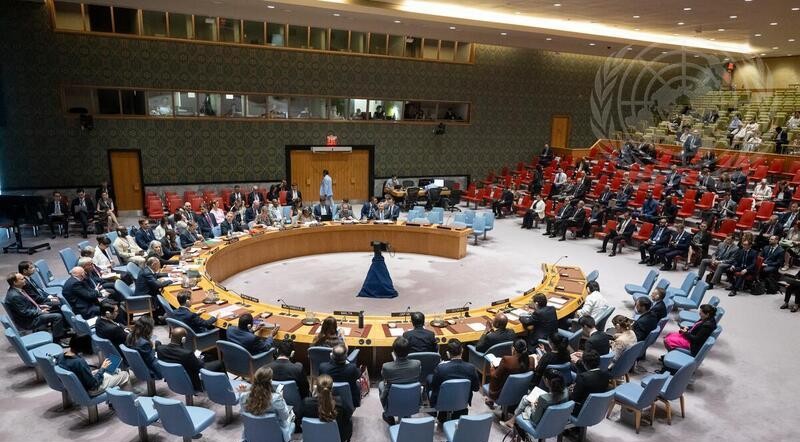
The United Nations Human Rights Council has strongly condemned the attack on the Shajareh Tayyebeh girls’ primary school in Minab, which killed at least 170 students and teachers, and called for immediate investigations and accountability for those responsible.
The emergency session in Geneva was convened at the request of Iran, China, and Cuba to review and condemn U.S. and Israeli airstrikes on the school. Senior officials addressed the session, including Iran’s Foreign Minister, the UN High Commissioner for Human Rights, the Special Rapporteur on the Right to Education, and a mother of victims.
Officials Demand Justice
Seyed Abbas Araghchi, Iran’s Foreign Minister, spoke virtually and described the attack as one of the “most horrific consequences” of what he called an ongoing “imposed war” by the United States and Israel that began on February 28. He stated that more than 175 students and teachers were killed and described the incident as part of a broader pattern of systematic human rights violations and breaches of international humanitarian law.
Araghchi also noted that over 600 schools have been destroyed or damaged in recent weeks, with more than 1,000 students and teachers killed or injured. He emphasized that the targeting of civilian infrastructure—including hospitals and essential facilities—was deliberate.
Volker Türk, UN High Commissioner for Human Rights, condemned the attack as a shocking example of war’s impact on children and civilians. He called for rapid, independent, and transparent investigations and urged the United States to promptly publish its findings into the targeting of the Minab school.
Farida Shaheed, UN Special Rapporteur on the Right to Education, described the attack as a potential “war crime” and a serious violation of international humanitarian law. Noting that Tomahawk missiles were used and that most victims were children aged 7 to 12, she stressed that schools enjoy special protection as civilian spaces and that any attack on them is strictly prohibited.
A Mother’s Testimony
Mohaddese Fallahat, whose two children were killed in the attack, spoke emotionally at the session. She described the tragedy as symbolic of the suffering of all families who send their children to school with trust. She called for the truth to be revealed, accountability for perpetrators, and justice—not for revenge, but to prevent similar tragedies in the future.
International Response
Nearly 60 countries and 19 civil society representatives spoke at the session, condemning the attack and urging swift, transparent, and independent investigations, as well as respect for humanitarian law during conflicts.
Key positions included:
- Switzerland: Deep concern over escalating attacks on educational infrastructure
- Kenya: Emphasis on restraint and diplomatic solutions
- Australia: Warning about depriving children of the right to education
- Ireland: Call for tension reduction and protection of civilian infrastructure
- Russia: Condemnation of the incident, attributing escalation to U.S. aggression
- Netherlands: Demand for immediate halt to attacks and emphasis on school safety
The UN Human Rights Council stressed the need for accountability and reparations, urging the international community to take urgent measures to protect schools and civilians.
Source: WANA News Agency