Abstract
Military conflict abroad produces downstream economic consequences that extend beyond geopolitical borders, influencing domestic health outcomes through inflationary pressure, supply chain disruption, and macroeconomic policy shifts. This article examines the health implications of the Iran conflict, estimating that the average U.S. household bears approximately $1,000 in direct and indirect costs, with cascading effects on medication adherence, chronic disease management, and mental health. Evidence from clinical observation and economic modeling suggests that war-driven inflation, interest rate hikes, and military spending constitute a structural determinant of health that disproportionately affects low-income and working-class populations. Policy recommendations include reallocating military expenditure toward domestic health infrastructure and integrating macroeconomic stability into public health planning.
Introduction
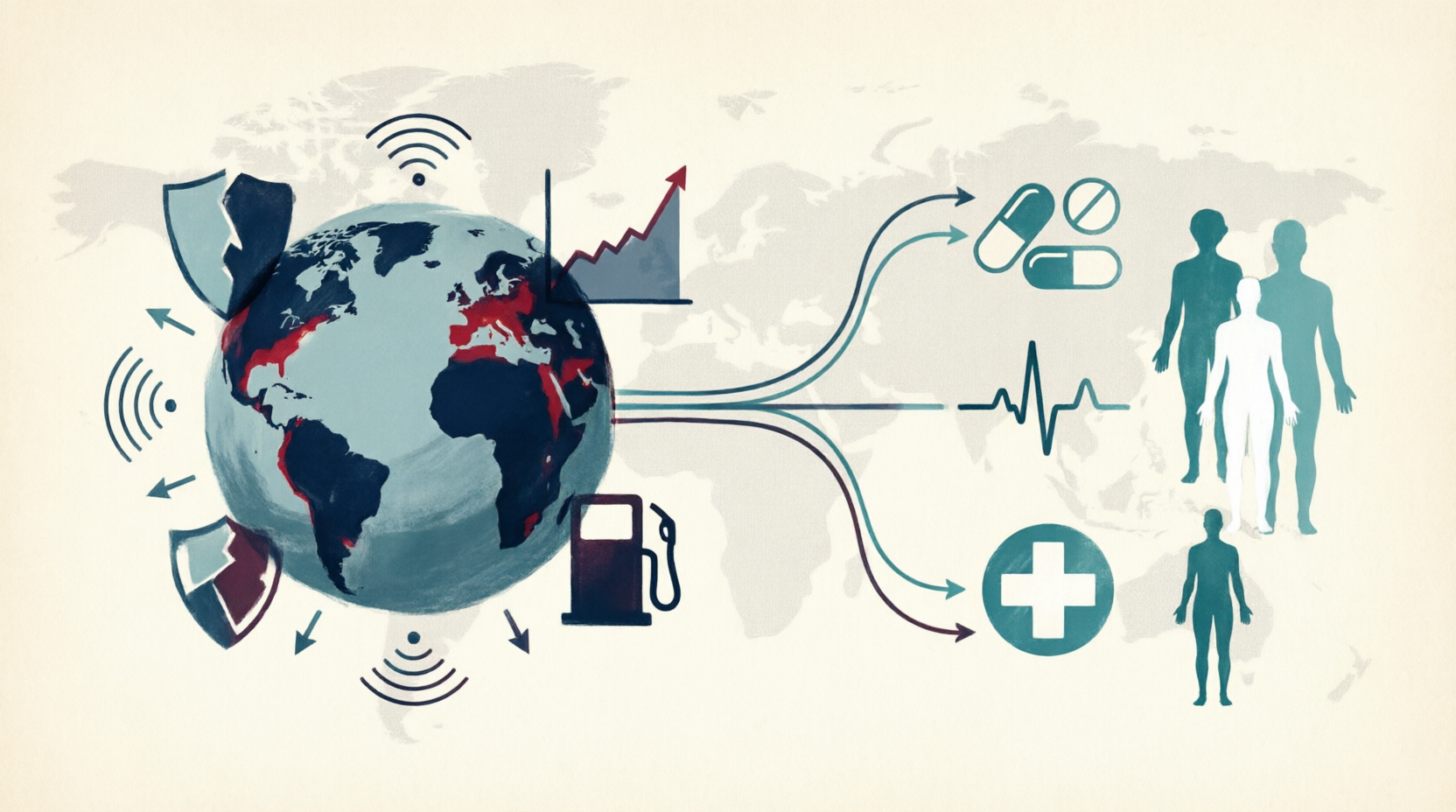
The relationship between armed conflict and population health is typically examined through the lens of direct casualties, displacement, and destruction of healthcare infrastructure. However, for nations not directly engaged in theater of operations, the health consequences of war are mediated through economic channels that are often overlooked in both clinical medicine and health policy. The 2026 Iran conflict provides a case study in how geopolitical instability translates into measurable health burdens for civilian populations thousands of miles from the front lines.
This analysis argues that war functions as a structural determinant of health—operating through fuel prices, interest rates, food supply chains, and fiscal policy—to exacerbate chronic disease prevalence, reduce treatment access, and increase allostatic load among American adults.
Economic Transmission Mechanisms
Fuel Costs and Healthcare Access
The escalation of military activity in the Middle East precipitated a sharp increase in global diesel and jet fuel prices. These increases have direct and indirect effects on health:
- Supply chain inflation: Rising diesel costs increase the price of transported goods, including pharmaceuticals, fresh produce, and medical supplies. These costs are passed to consumers, reducing household disposable income available for healthcare expenditures.
- Patient mobility: Elevated gasoline prices impose a financial barrier to clinic attendance, particularly for patients in rural or exurban areas with limited public transportation infrastructure.
- Specialty care access: Increased jet fuel costs raise airline ticket prices, limiting access to tertiary care centers for patients requiring specialized interventions or consultations.
Interest Rates and Allostatic Load
Central bank responses to war-induced inflation—namely, interest rate hikes—have indirect but clinically significant health effects. Higher borrowing costs increase the financial burden of existing credit card debt, auto loans, and adjustable-rate mortgages. Financial strain is a well-documented predictor of:
- Elevated cortisol secretion and sympathetic nervous system activation
- Increased incidence of hypertension and cardiovascular events
- Sleep disruption and mood disorders
- Reduced self-efficacy in chronic disease self-management
These pathways suggest that macroeconomic policy decisions, ostensibly unrelated to health, function as upstream determinants of physiological dysregulation.
Military Expenditure and Opportunity Cost
The estimated $250 per household allocated to military operations in the Iran conflict represents a fiscal trade-off with direct implications for domestic health spending. Were these funds redirected, they could support:
- Expansion of Federally Qualified Health Centers (FQHCs)
- Subsidization of insulin and other essential medications under the Inflation Reduction Act
- Stabilization of rural hospital networks facing closure
- Investment in community-based mental health services
The current allocation pattern constitutes a de facto regressive health tax, disproportionately affecting lower-income households with higher marginal propensities to consume healthcare.
Clinical Observations and Case Evidence
Longitudinal clinical data from primary care settings in California reveal emerging trends consistent with the economic transmission model described above. Patients with pre-existing type 2 diabetes have demonstrated declining medication adherence correlated temporally with fuel price increases. In one representative case, a 62-year-old female cashier with uncontrolled diabetes reported cost-related insulin rationing, directly attributed to increased transportation expenses.
This pattern is not idiosyncratic but reflects a broader phenomenon in which patients prioritize immediate economic survival over long-term disease management—a rational but medically detrimental choice.
Unquantified Externalities
Economists have acknowledged that the $1,000 per household estimate is conservative, excluding:
- Fertilizer price volatility, which increases food costs and undermines nutritional security
- Helium supply disruptions, affecting semiconductor manufacturing and, by extension, medical device production
- Global supply chain reconfiguration costs, which are passed to consumers in the form of higher durable goods prices
These unmeasured factors suggest that the true health burden may exceed current projections.
Policy Implications and Recommendations
To mitigate the health consequences of war-driven economic strain, the following policy measures are proposed:
- Health impact assessments for all major foreign policy decisions, modeled on existing environmental impact review frameworks.
- Emergency medication subsidies triggered by inflation thresholds, ensuring that essential drug prices remain stable during supply chain shocks.
- Expansion of telehealth and mobile clinic programs to reduce transportation dependency for routine care.
- Fiscal buffers in household budgets, such as temporary interest rate caps on medical debt during geopolitical crises.
- Reallocation of defense discretionary spending toward domestic health infrastructure, with specific targets for rural and underserved communities.
Conclusion
War is not only a geopolitical event but also a clinical one. The economic sequelae of armed conflict—inflation, interest rate volatility, supply chain disruption, and fiscal reallocation—produce measurable harm to population health, particularly among vulnerable groups. Recognizing war as a structural determinant of health requires a reconceptualization of both clinical practice and public policy, moving beyond individual behavioral interventions toward systemic economic protections. The data suggest that the health costs of war are neither incidental nor unavoidable; they are, rather, the predictable outcomes of policy choices that can and should be evaluated through a health equity lens.
Dr. Sloane Nerrick is a primary care physician in California. This article reflects clinical observations and policy analysis based on data available as of July 2026.